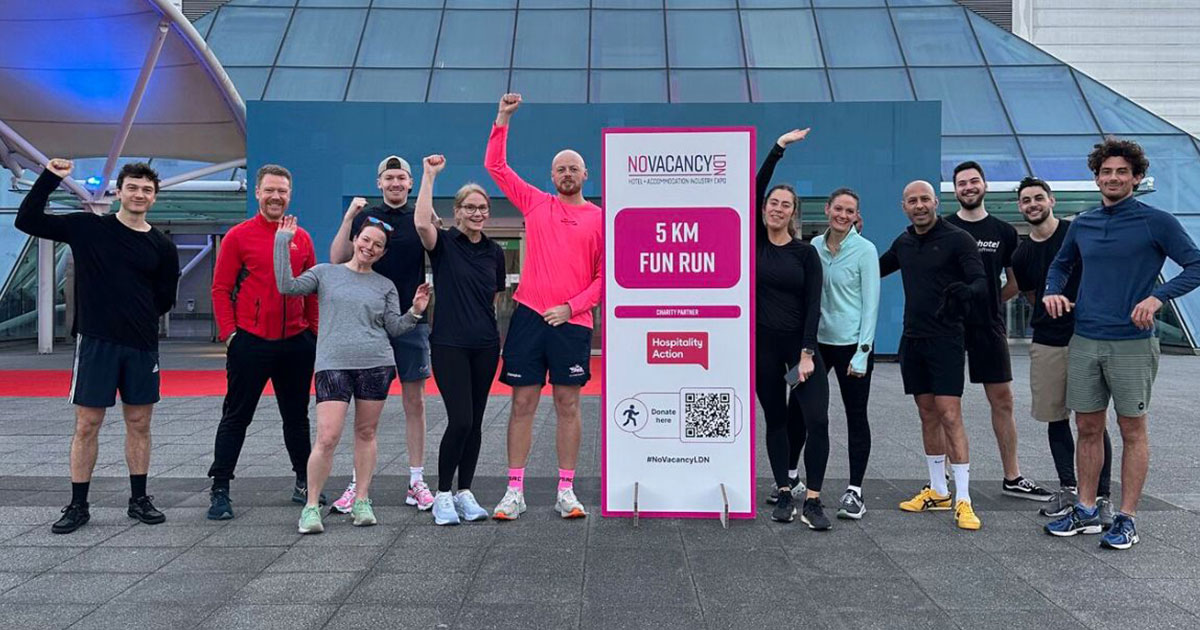
NoVacancy London made its UK debut in 2026 at ExCeL London, bringing hotel and accommodation leaders together around four themes shaping the industry’s next chapter: technology, commerce, design, and experience. Over two concentrated days (25–26 February), the agenda and expo floor focused on practical tools — cost-saving solutions, guest-experience innovation, and sustainability strategies designed to work in real operations, not just slide decks.
For Clean the World, this conference was a timely reminder of where hospitality is heading: toward measurable sustainability, clearer data, and technology that reduces friction for both guests and teams — not technology for its own sake.
Clean the World CEO Shawn Seipler on Turning Sustainability into Reality

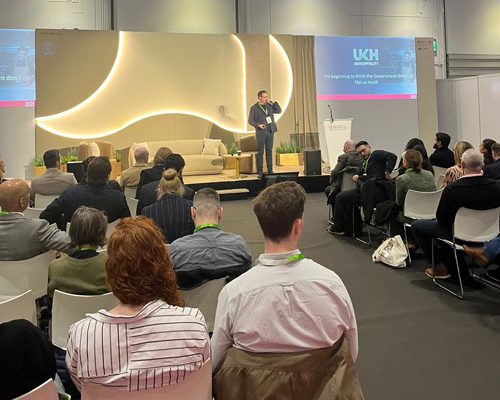
On Day 1, Clean the World CEO Shawn Seipler joined the Energy & Sustainability panel “Beyond the buzzword: the people turning hotel sustainability into reality.” Moderated by Grace Greensitt (GSI), the panel brought together perspectives from independent hotel ownership, group-level ESG leadership, and neuromarketing research through the University of Surrey.
Panellists:
- Caroline Gregory — Owner, The Lovat Loch Ness
- Alex Matulina — ESG Manager, PPHE Hotel Group
- Safina Naz — Neuromarketing Researcher, University of Surrey
The conversation’s title captured the core challenge hotels face in 2026: sustainability can’t remain a “nice-to-have initiative.” It needs a clear “why,” operational follow-through, and proof points that make sense to guests and stakeholders.
Clean the World exists to help make that “reality shift” easier for hotels. Through the Global Hospitality Recycling Program, we capture what would otherwise be discarded — soap and plastic amenities — and transform it into measurable environmental impact and hygiene access support. Since 2009, Clean the World Global’s impact includes diverting more than 31.8 million pounds of waste from landfills, donating over 116 million bars of recycled soap, and distributing more than 7.5 million hygiene kits.
The program is built for hospitality operations, with a rigorous soap and plastic recycling process that includes third-party laboratory testing at every stage — from collection through to the manufacture of new soap bars and the processing of plastic bottles into pellets for circular reuse.
From "The Road to 2030" to the Show Floor: What Hoteliers Are Prioritising Now

Day 2’s “UK hospitality outlook: challenges and opportunities” keynote from UKHospitality Chief Executive Allen Simpson reinforced the reality behind the innovation: UK operators are navigating genuine economic and regulatory pressure.
UKHospitality represents over 750 companies operating around 140,000 venues in a sector employing 3.5 million people. Its policy priorities show exactly why “sustainability that works” matters:
- NICs changes and wage costs are being framed as major headwinds for hospitality staffing and investment, with UKHospitality calling for mitigation measures.
- Business rates reform continues to be a critical issue, with UKHospitality arguing that sharp increases will intensify pressure — particularly for hotels.
- VAT and tourism competitiveness remain active campaign areas, with UKHospitality citing strong public support for a reduced VAT rate for hospitality and tourism.
In this environment, collaboration becomes a strategy. Hotels need partners and programmes that reduce waste and deliver measurable results without adding operational complexity — especially when teams are already stretched. The question of shared responsibility for hotel amenity sustainability is increasingly urgent as regulators and guests alike demand proof over promises.
What Today's Research Says: Sustainability Needs Proof, Not Slogans
A key message for hotels (and hotel suppliers) is that sustainability is expected — but trust is fragile.
Booking.com’s 2024 research found 75% of travellers say they want to travel more sustainably in the next 12 months. At the same time, consumer fatigue is real: Deloitte’s UK research found high proportions reporting low interest and scepticism, with price barriers increasingly limiting sustainable action. PwC’s 2024 Voice of the Consumer Survey reported consumers say they are willing to pay an average of 9.7% more for sustainably produced goods — while also noting that inflation and cost-of-living pressures may constrain actual spend.
For hotels specifically, academic research suggests green certification labels do influence online booking choices, but compete with “core” booking drivers like cancellation policy, rating, price, and location. And a University of Surrey–linked study suggested that too much sustainability information can overwhelm users and may increase perceptions of greenwashing.
This is where “visible progress” can outperform perfection. Evidence-backed initiatives — paired with clear, accurate claims — help hotels communicate sustainability without triggering scepticism. UK government guidance under the Green Claims Code emphasises that vague terms like “green” or “sustainable” are risky unless the overall implication can be proven and claims are substantiated across supply chains.
In short: consumers and travellers want sustainability, but they reward it most when it is understandable, verified, and connected to real benefits — not when it is presented as abstract branding. UK hotel groups are already demonstrating results — learn how hotels are turning plastic and soap waste into global impact.
Clean the World Takeaway: Sustainability That's Operational, Measurable, and Human
NoVacancy London 2026 made one thing clear: the future of hospitality isn’t a trade-off between technology and values. It’s about applying both with intention.
AI will keep accelerating, and hotels will keep adapting. But sustainability will remain a defining priority — especially when it’s built into operations, backed by measurable impact reporting, and communicated with clarity.
That is exactly where Clean the World fits: helping hotels turn a daily operational reality — discarded soap and plastic amenities — into a circular impact solution, while supporting hygiene access through partners like The WASH Foundation.
And in the UK and Europe, PPHE Hotel Group’s partnership with Clean the World shows what scalable, circular progress looks like in practice — collecting plastic bottled amenities that would otherwise go to landfill and converting them into pellets for reuse in circular products.
For a look at the momentum leading into this event, read Clean the World’s 2025 sustainability highlights.

Global Hospitality Recycling Program and start turning waste into measurable impact today.