In Replacer’s Inside Story interview, Léa Bensaadoune, Regional Director of Sustainability at Fairmont CWMC, explains how Fairmont Banff Springs, a luxury hotel with more than 700 rooms, collects both soap and plastic bathroom amenities through Clean the World’s Global Hospitality Recycling Program.
Hotels can send discarded hotel soap and plastic bathroom amenities for recycling by collecting them separately during housekeeping, consolidating them in dedicated boxes and shipping them to a specialist partner that processes each material and reports the weight received. At Fairmont Banff Springs in Alberta, Canada, this routine has run with Clean the World for more than a decade.
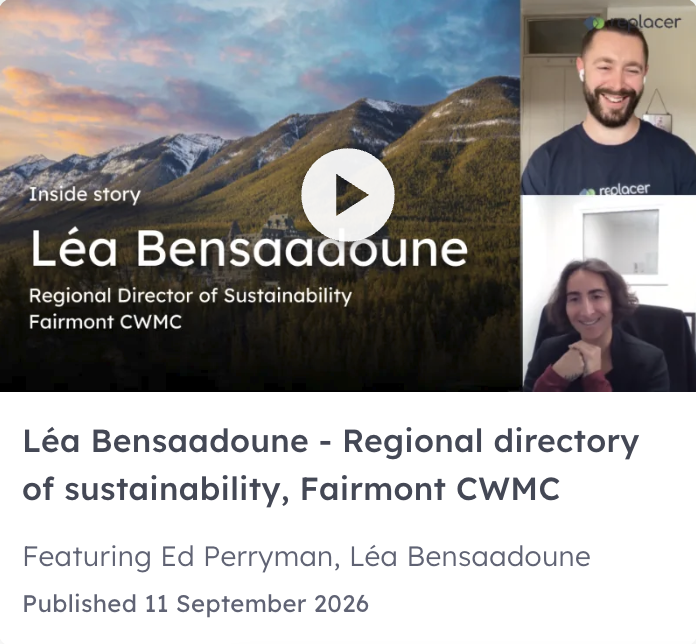
Léa Bensaadoune, Regional Director of Sustainability for Fairmont CWMC, described the set-up in an Inside Story interview with Ed Perryman, co-founder and CEO of Replacer, the free sustainability software platform for hospitality businesses, published on September 11, 2026[1]. Speaking about the program, she said Clean the World does this “really well”[1]. Her account shows what collecting both soap and bottles looks like inside a large property working to brand standards. It follows our case study on Fairmont Le Manoir Richelieu in Quebec, another Fairmont property in Canada taking part in the program.
Why Brand Standards Create a Steady Flow of Soap and Bottles
Branded hotels often set brand standards for exactly what goes into every bathroom. At Fairmont Banff Springs, part of Fairmont Hotels & Resorts, that standard includes soap in every room for every stay.
“Being a [Fairmont] brand, we have certain brand standards that we need to abide by. And it means that, for example, in each room for each stay, we need to have two different bar soaps.”
Léa Bensaadoune, Regional Director of Sustainability, Fairmont CWMC[1]
As Léa notes, few guests use a whole bar during their stay. She explains that, at this property, the hotel has moved from miniatures to large-format amenity bottles, which are replaced rather than refilled under its brand standard[1]. Together, these create a predictable flow of soap and plastic that needs a defined route.
How Collection Works for Housekeeping
For any hotel considering the program, the first practical question is what it means for housekeeping. At Fairmont Banff Springs, the answer is a routine built around clearly marked collection boxes.
“Clean the World does this really well … they have very identifiable boxes.”
Léa Bensaadoune[1]
- Collect on each floor. Collection boxes sit in the back-of-house area on each of the hotel’s eight floors.
- Consolidate at service level. Teams bring the boxes to the service level, where larger Clean the World boxes keep soap on one side and plastic bottles on the other.
- Create a shipping label. The team generates a label directly from the Clean the World dashboard.
- Ship. The boxes travel to Clean the World, where each delivery is weighed on receipt.
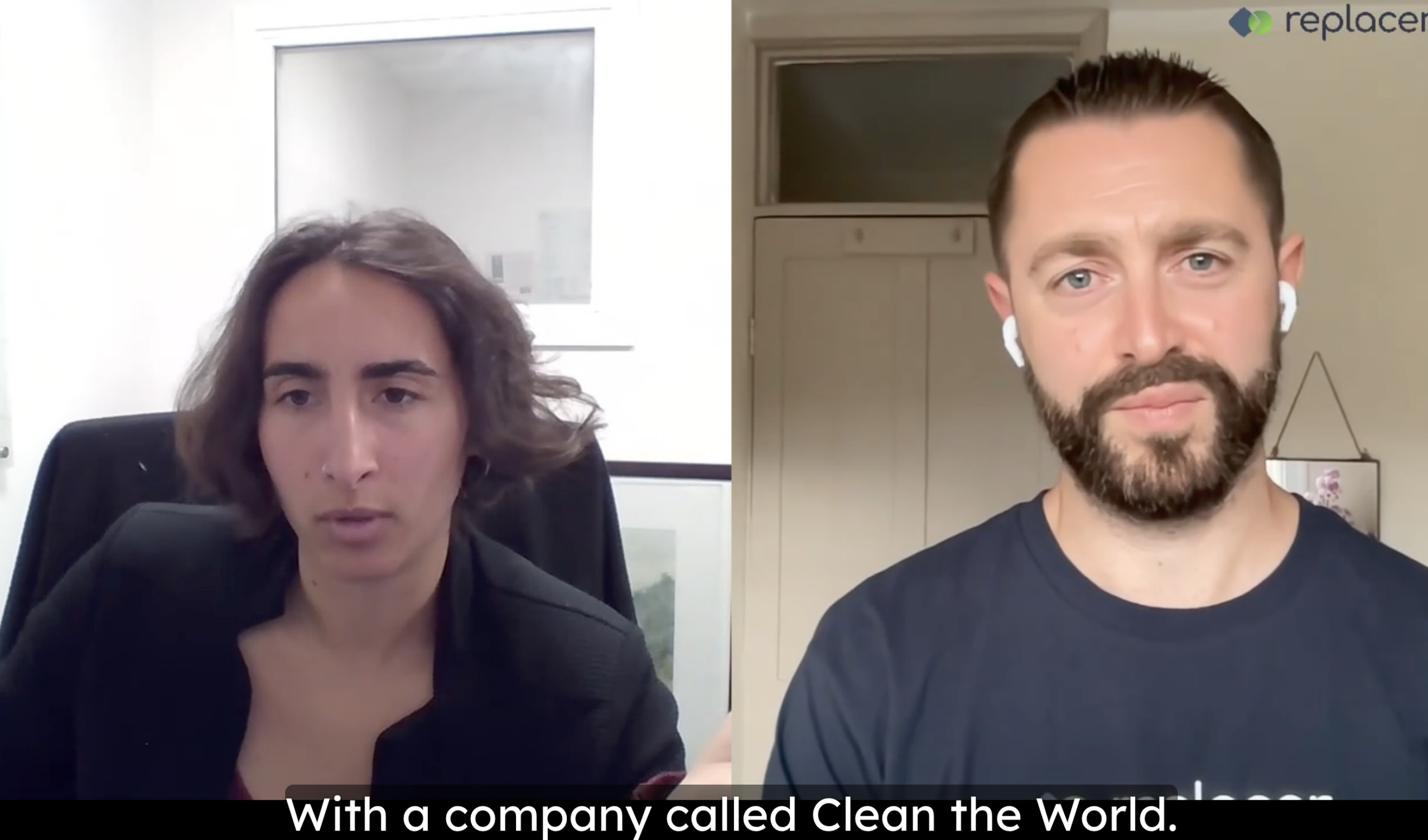
Léa describes the whole process as “pretty simple”[1]. Separating soap and bottles at source helps keep the material streams separate for sorting and processing. Housekeeping teams carry this routine every day, which is why we recognize housekeepers as hotel sustainability heroes. The Clean the World team sets out how the Global Hospitality Recycling Program works for each property.
What Happens to the Soap and Bottles
Clean the World’s soap recycling process grinds partially used soap into pellets, refines it to remove foreign particles, sterilizes it and refines it again before pressing new bars. Samples of the new bars are tested by the Biological Consulting Services Laboratory, an accredited third-party laboratory[2]. The new bars are donated to global NGOs, such as The WASH Foundation, to support communities worldwide[2].
Plastic bathroom amenities are sorted for processing. Accepted materials, the treatment of residual product and processing routes vary by location, so hotels should confirm the arrangements for their property with the Clean the World team.
Measuring Results: Soap and Plastic Collected
Every box is weighed when Clean the World receives it, and the results appear on the hotel’s partner dashboard, which Léa describes as “pretty cool”[1].
| Measure | Result | Type |
|---|---|---|
| Soap collected (gross weight) | 14,950 lbs (6,781 kg) | Measured |
| Plastic bathroom amenities collected (gross weight) | 28,472 lbs (12,915 kg) | Measured |
| Total collected (gross weight) | 43,423 lbs (19,696 kg) | Measured |
Léa sees collected weight as the most important figure the dashboard provides[1]. Collected weight provides a direct measure of the material received. Any calculated environmental indicators should be reported separately, with their methodology, material coverage and limitations clearly stated. For more on putting these figures to work, read how bathroom amenity waste can support ESG reporting.
Communicating the Program to Guests
“It’s a delicate thing to communicate sustainability to luxury guests.”
Léa Bensaadoune[1]
Fairmont Banff Springs shares its participation in the program through the sustainability section of its website and through a sustainability fact sheet for B2B guests, rather than through in-room messaging[1]. That approach suits many properties. A fact sheet built on measured weights gives corporate clients and event planners specific, checkable information. Guest communication works best when it names the specific action and the measured result.
Practical Steps for Hotels Getting Started
“Just start small. Start with what is feasible for you.”
Léa Bensaadoune, on advice for hotels[1]
- Map the flow. Note where soap and bottles leave guest rooms today, floor by floor.
- Set one separation rule. Soap in one box, bottles in another, from the housekeeping cart onward.
- Choose a consolidation point. A service or receiving area works well for larger boxes and shipping.
- Decide what you will report. Use measured weight as the base figure and label any estimates clearly.
- Agree where results will appear. Your website, a B2B fact sheet or your annual sustainability report.
For another Canadian example, read how Fairmont Le Manoir Richelieu, a historic resort in La Malbaie, Quebec, takes part in the program, or browse our hospitality case studies for more hotel examples. For a wider view of guest-room waste, download our free Hotel Sustainability Guide.
Bring the Program to Your Property
Clean the World is a social enterprise. Through the Global Hospitality Recycling Program, it works with around 8,600 hospitality partners representing more than 1.4 million hotel rooms[2].
If you manage a hotel or portfolio in the United States or Canada, talk to our team about how the program could work at your property and the data it would give you. When requesting a quote, include your location, room count and current amenity formats, and ask the team to explain pricing, storage requirements, collection arrangements and reporting options for your property.
With thanks to Léa Bensaadoune and to Replacer, whose Inside Story series features hotel teams taking practical action. Watch the full interview on Replacer[1] and follow Replacer on LinkedIn.
Frequently Asked Questions
How do hotels collect soap for recycling?
Housekeeping teams set aside partially used soap bars during room cleaning, store them in designated collection boxes and ship them to Clean the World, where the soap is recycled into new bars.
Can hotels collect plastic amenity bottles too?
Yes. Plastic bathroom amenities are collected alongside soap, in separate boxes. Accepted materials vary by location, so confirm the details for your property with the Clean the World team.
Does collection add work for housekeeping?
At Fairmont Banff Springs, staff use collection boxes on each floor and ship them from one central point. Léa Bensaadoune describes the process as “pretty simple.”[1]
What results do hotels receive?
Hotels can see the weight of soap and plastic bathroom amenities collected on their Clean the World dashboard.
How can my hotel get started?
Request a quote from Clean the World and include your location, room count and current amenity formats.
Sources
- Replacer, Inside Story: Léa Bensaadoune, Regional Director of Sustainability, Fairmont CWMC, with Ed Perryman. Published September 11, 2026. https://www.replacer.com/
- Clean the World, Soap and Plastic Recycling Process. https://cleantheworld.org/soap-and-plastic-recycling-process/