A verified net zero hotel is a hotel whose greenhouse gas emissions are measured and addressed against a defined net zero methodology, with the relevant requirements independently assessed.
For hotels, this goes far beyond energy use. Emissions can arise across food, procurement, laundry, transport, guest amenities, waste and the wider supply chain.
The World Sustainable Hospitality Alliance’s Net Zero Methodology for Hotels provides a recommended industry approach for establishing emissions baselines, defining boundaries and developing a pathway towards net zero.[1]
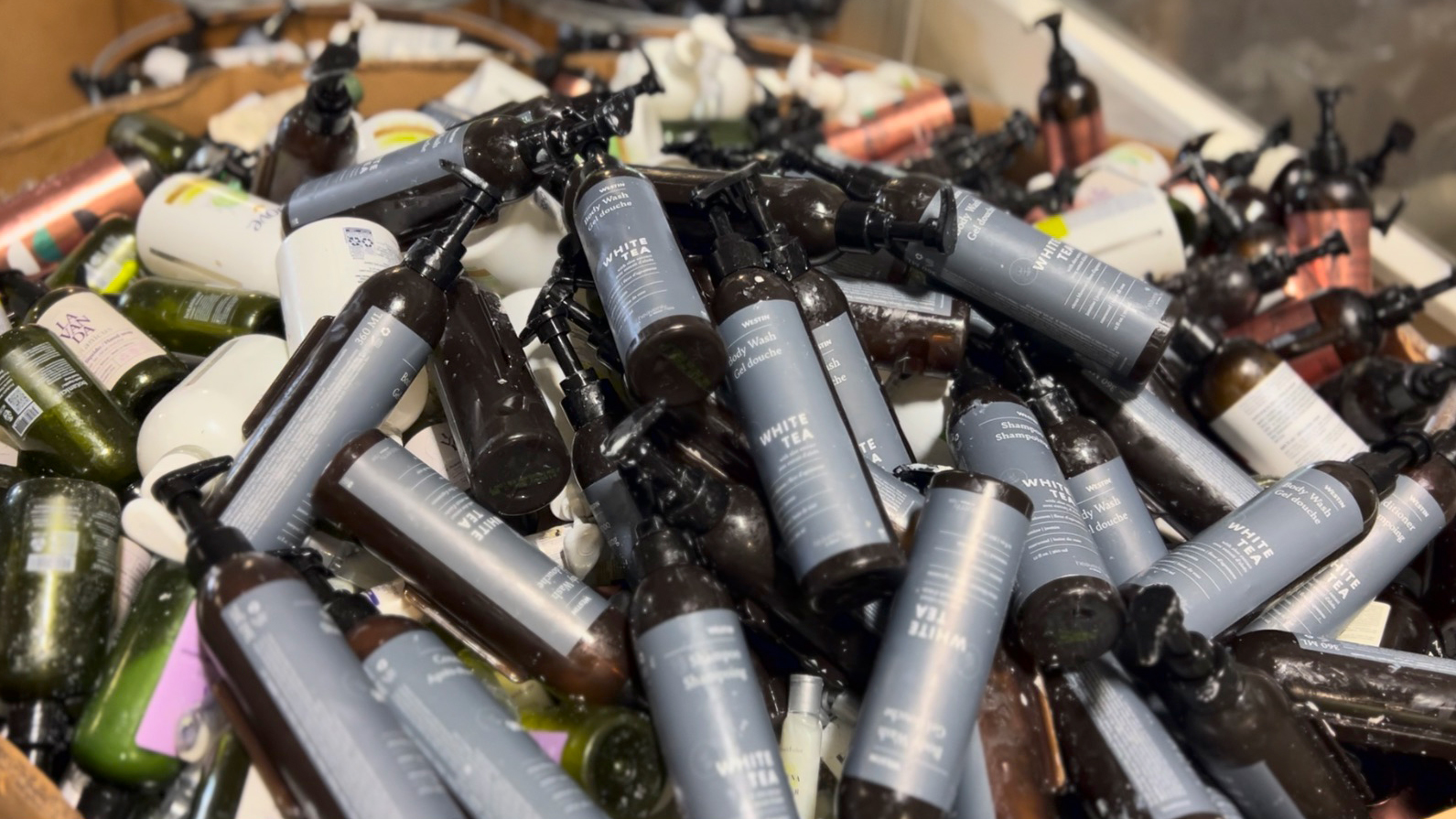
Waste is one part of this wider picture. Clean the World helps participating hotels collect eligible used soap and plastic bathroom amenities through defined program routes, with associated program data recorded and reported.
What Is a Verified Net-Zero Hotel?
There is no single universal hotel certification called “Verified Net Zero” that applies across the global hospitality industry.
Instead, credible net zero approaches typically involve three areas:
- Measure: Establish where greenhouse gas emissions arise across operations and the value chain.
- Reduce: Prioritise emissions reductions within the defined boundary.
- Address residual emissions: Manage remaining emissions in accordance with the methodology or standard being followed.
The Net Zero Methodology for Hotels provides a recommended approach that hotel companies and individual properties can adapt to their circumstances.[1]
Why Verified Net Zero Hotels Matter
Hotels are complex operating environments.
Their greenhouse gas footprint can extend across:
- heating and cooling
- electricity
- food and beverage
- laundry
- procurement
- transport
- guest amenities
- waste
- suppliers and outsourced services
A hotel’s net zero strategy therefore involves multiple areas of its operation and value chain.
The Net Zero Methodology for Hotels provides guidance on establishing emissions baselines, defining boundaries and planning a longer-term net zero pathway.[1]
What Is the Greenhouse Gas Protocol?
Waste generated through hotel operations can form part of Scope 3 greenhouse gas accounting.
Under the Greenhouse Gas Protocol, Scope 3 Category 5: Waste Generated in Operations covers emissions arising from the third-party treatment and disposal of waste generated by an organisation’s operations.[2]
Treatment routes can include:
- landfill
- recycling
- incineration
- composting
- waste-to-energy
- wastewater treatment
Understanding individual waste streams can therefore provide activity data that may be used within wider Scope 3 analysis.
However, the weight of material collected or processed is not itself a complete Scope 3 greenhouse gas calculation. Calculating associated emissions may also require information including material type, treatment route and relevant emissions factors.[2]
Where Hotel Waste Fits Within Scope 3
Waste generated in hotel operations can form part of Scope 3 greenhouse gas accounting.
Under the Greenhouse Gas Protocol, Scope 3 Category 5: Waste Generated in Operations covers emissions associated with the third-party treatment and disposal of waste generated by an organisation’s operations.[2]
This can include treatment routes such as:
- landfill
- recycling
- incineration
- composting
- waste-to-energy
- wastewater treatment
For hotels, understanding defined waste streams can therefore provide useful activity data for wider Scope 3 analysis.
However, the weight of waste collected or diverted is not itself a complete Scope 3 greenhouse gas calculation.
A full calculation may also require information such as material type, treatment method and relevant emissions factors.[2]
Clean the World’s Role in Supporting Net Zero Hospitality
Clean the World supports hotels by providing a defined route for eligible used soap and plastic bathroom amenities after guest use.
Through the Global Hospitality Recycling Program, participating hotels collect eligible materials for return through documented regional routes.
Program reporting can provide information including:
- material collected
- recorded weight
- participating properties
- collection activity
- program performance
This data can help sustainability teams understand a specific operational material stream and may contribute activity data to wider waste and Scope 3 analysis.
Participation in Clean the World does not itself establish, certify or verify a hotel’s net zero status. It addresses one specific area within a much broader hotel environmental strategy.
Case Study: Radisson Hotel Manchester City Centre
Radisson Hotel Manchester City Centre provides an example of how multiple operational measures can form part of a broader verified net zero program.
The 252-room property became Radisson Hotel Group’s first UK Verified Net Zero hotel in May 2025.[3]
Radisson states that its Verified Net Zero approach encompasses energy, food, waste, amenities and other operational and supply-chain emissions, with the hotel’s alignment independently verified by TÜV Rheinland.[3][5]
Approximately 60% Carbon Footprint Reduction
Radisson reports that the Manchester hotel has reduced its total carbon footprint by approximately 60%, with remaining emissions addressed through carbon removal measures under its Verified Net Zero program.[4]
100% Renewable Electricity
Radisson reports that the property purchases 100% renewable electricity.[3]
The hotel has installed heat pumps for hot water and uses an electrified kitchen with induction cooking, eliminating on-site gas use according to Radisson.[3]
Operational and Scope 3 Measures
Radisson’s Verified Net Zero program also addresses operational Scope 3 emissions across areas including food and beverage, waste, laundry, amenities and business travel.[3][5]
Measures identified by Radisson include:
- lower-carbon menu development
- food-waste monitoring
- Too Good To Go
- recycling infrastructure
- reduced paper use
- bulk bathroom amenities
- collection of eligible bathroom amenity packaging through Clean the World.[3]
Independent Verification
Radisson states that its Verified Net Zero program is based on the Net Zero Methodology for Hotels, with participating properties independently verified by TÜV Rheinland.[3][5]
This distinction is important.
TÜV Rheinland verifies Radisson’s program against the relevant methodology. Clean the World does not verify the hotel’s net zero status.
Clean the World’s role relates specifically to the collection, processing and reporting of eligible used bathroom amenities through its program.
Can Credible Net Zero Action Influence Guest Choice?
Radisson reported results from its operational Verified Net Zero hotels in Manchester and Oslo in March 2026.
According to Radisson, awareness of the Verified Net Zero concept exceeded 70% at both properties, while around 20% of guests indicated that the hotel’s Net Zero status influenced their booking decision.[5]
These are results reported by Radisson for these specific properties and should not be interpreted as hospitality-industry benchmarks.
They do, however, provide an example of how a hotel group is assessing guest awareness of its net zero program alongside operational performance.
What Can Hotel Operators Do?
A net zero pathway will vary between properties, but several principles can help structure the process.
Measure
Establish a greenhouse gas baseline and understand the relevant Scope 1, Scope 2 and Scope 3 emissions within the chosen boundary.
Prioritise Reduction
Identify opportunities to reduce emissions across areas such as:
- energy efficiency
- electrification
- renewable electricity
- procurement
- food waste
- material and waste management
Understand Individual Waste Streams
Look beyond total waste where possible.
Tracking individual streams such as food, packaging, textiles and bathroom amenities can provide more detailed operational information.
Work With Relevant Partners
Hotels may work with energy providers, food specialists, technology providers, suppliers and waste-management partners to address different areas of their environmental strategy.
Clean the World can support the management of eligible used soap and plastic bathroom amenities through its hospitality program.
Measure and Report
Environmental claims should be supported by evidence appropriate to the claim being made.
Hotels should distinguish clearly between directly measured operational data and figures that are calculated, estimated or derived using emissions methodologies.
Conclusion
Net zero hospitality requires action across multiple areas of hotel operations and the wider value chain.
The Net Zero Methodology for Hotels provides an industry-specific framework for establishing baselines, defining emissions boundaries and developing net zero pathways.[1]
Radisson Hotel Manchester City Centre demonstrates how Radisson is applying this approach across energy, food, waste, amenities and supply-chain activity within a program independently verified by TÜV Rheinland.[3][5]
Clean the World supports one specific part of that wider approach: providing participating hotels with a defined route for eligible used soap and plastic bathroom amenities, with associated program data recorded and reported.
Frequently Asked Questions
What is a verified net zero hotel?
A verified net zero hotel is a hotel whose emissions and net zero approach have been assessed against a defined methodology or standard by an appropriate independent party.
The exact requirements depend on the methodology and verification program being used.
What is the Greenhouse Gas Protocol?
The Greenhouse Gas Protocol provides standards and guidance for measuring and reporting greenhouse gas emissions across Scope 1, Scope 2 and Scope 3.[2]
What is the UK’s first Verified Net Zero hotel?
Radisson Hotel Group identifies Radisson Hotel Manchester City Centre as its first UK Verified Net Zero hotel. The property completed its transition to Radisson’s Verified Net Zero program in May 2025.[3]
How much has Radisson Hotel Manchester City Centre reduced its carbon footprint?
Radisson reports an approximately 60% reduction in the hotel’s total carbon footprint.[4]
Does net zero mean a hotel produces no greenhouse gas emissions?
Not necessarily.
Net zero approaches generally prioritise substantial emissions reductions and then address residual emissions according to the methodology or standard being followed.
What are Scope 1, Scope 2 and Scope 3 emissions?
Scope 1 covers direct emissions from sources owned or controlled by an organisation.
Scope 2 covers indirect emissions associated with purchased electricity, steam, heating and cooling.
Scope 3 covers other indirect emissions occurring across an organisation’s value chain.[2]
How does hotel waste relate to Scope 3 emissions?
Under the Greenhouse Gas Protocol, Scope 3 Category 5 covers emissions from third-party treatment and disposal of waste generated through an organisation’s operations.[2]
Waste weight can provide useful activity data, but weight alone is not a complete Scope 3 emissions calculation.
How does Clean the World support hotels?
Clean the World provides participating hotels with a defined route for collecting eligible used soap and plastic bathroom amenities, with associated program data recorded and reported.
At Radisson Hotel Manchester City Centre, Clean the World supports the management of eligible bathroom amenity packaging as one element within Radisson’s broader Verified Net Zero program.[3]
Sources
[1] World Sustainable Hospitality Alliance.
Net Zero Methodology for Hotels.
https://sustainablehospitalityalliance.org/resource/net-zero-methodology-for-hotels/
[2] Greenhouse Gas Protocol.
https://ghgprotocol.org/
https://ghgprotocol.org/standards-guidance
Technical Guidance for Calculating Scope 3 Emissions: Category 5, Waste Generated in Operations.
https://ghgprotocol.org/sites/default/files/2022-12/Ch5_GHGP_Tech.pdf
[3] Radisson Hotel Group.
Radisson Hotel Group launches first two Verified Net Zero hotels.
19 May 2025.
https://www.radissonhotels.com/en-us/corporate/media/press-releases/Radisson-Hotel-Group-launches-first-two-Verified-Net-Zero-hotels
[4] Radisson Hotel Manchester City Centre.
Net Zero.
https://www.radissonhotels.com/en-us/hotels/radisson-manchester-city-centre-net-zero/net-zero
[5] Radisson Hotel Group.
Verified Net Zero Hotels scale from pilot to program as Radisson Hotel Group targets 100 by 2030.
23 March 2026.
https://www.radissonhotels.com/en-us/corporate/media/press-releases/Verified-Net-Zero-Hotels-scale-from-pilot-to-program-as-Radisson-Hotel-Group-targets-100-by-2030