
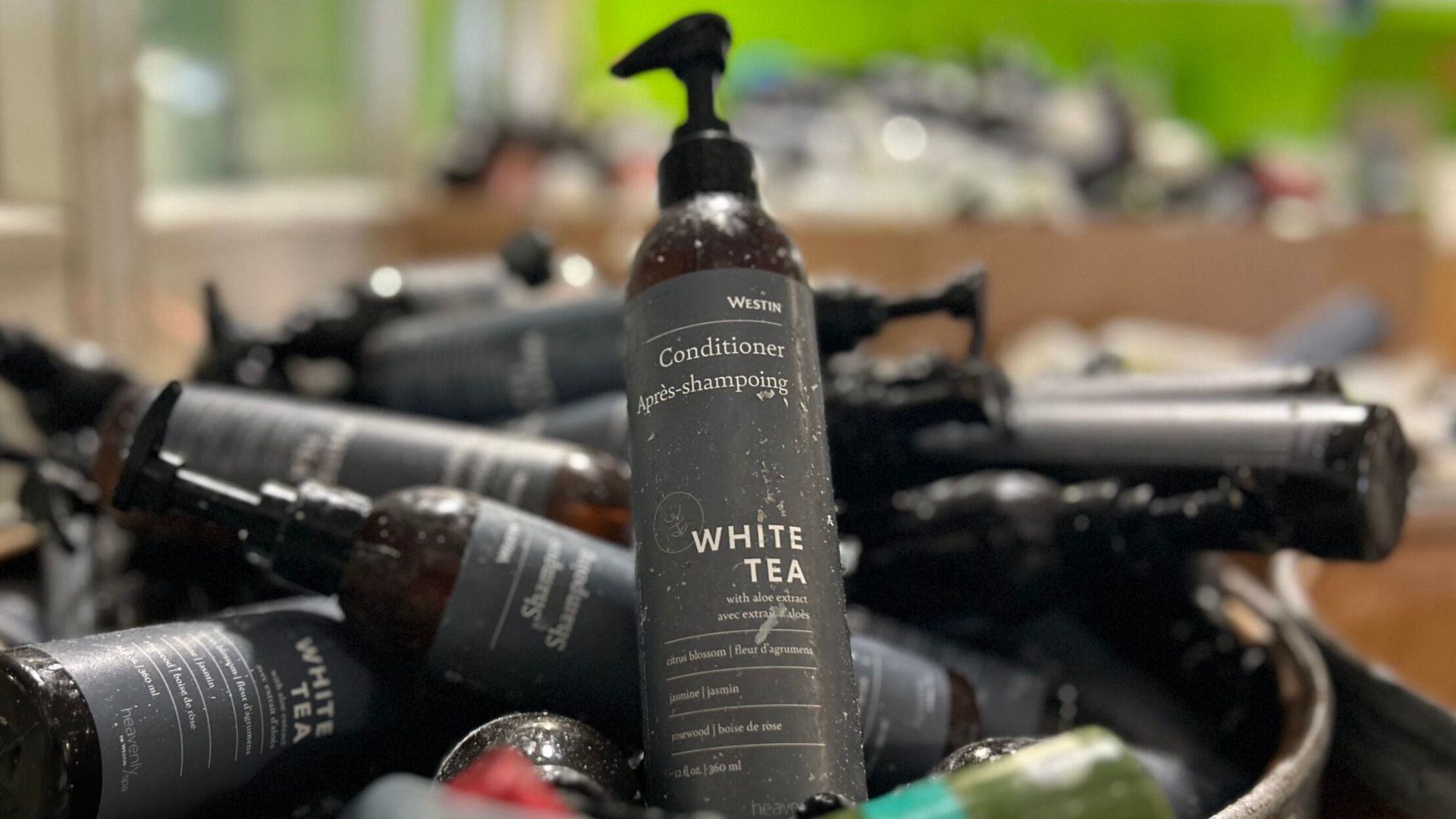
Hotels are becoming increasingly sophisticated in the way they measure and communicate environmental performance.
Energy consumption, water use, carbon emissions and food waste are now established priorities across much of the hospitality industry. As reporting develops, hotel organisations are also gaining greater visibility over the individual materials and operational processes that contribute to the wider environmental picture.
Bathroom amenities are one example.
Discarded soap bars, plastic amenity bottles, dispensers, pumps, caps and residual liquids represent a specific and recurring material stream within hotel operations. Individually, these items can appear relatively small. Across hundreds of rooms, multiple properties and thousands of guest stays, however, the quantities can become significant.
Greater visibility over these materials can help hotels understand what is being collected, how it is managed after leaving the property and how the resulting information can contribute to broader environmental, social and governance objectives.
The opportunity is not to present bathroom amenity waste as the defining sustainability issue facing hospitality. It is to recognise that clearer information from individual operational streams can help hotels build a more complete and useful picture of environmental performance.
What is Bathroom Amenity Waste?
Bathroom amenity waste includes materials associated with the soap, shampoo, conditioner, body wash and other personal-care products provided in hotel guest rooms.
Depending on the hotel’s amenity system, this may include:
- partially used or discarded soap bars
- plastic amenity bottles
- larger dispensers
- pumps and caps
- replaceable cartridges
- residual liquids
- refill containers and associated components
The materials are generally encountered first by housekeeping teams before being transferred into the hotel’s wider collection or waste-management systems.
This gives bathroom amenity waste a distinctive position within hotel operations. It connects housekeeping, procurement, sustainability, hotel operations, logistics and external processing partners through one recurring material stream.
Why Greater Amenity Waste Visibility Matters
Once materials leave a hotel, the information associated with them can become fragmented across suppliers, collection providers and processing facilities.
A hotel may know that discarded amenities have been placed into a dedicated collection stream, but sustainability teams may also need to understand:
- how much material was collected
- which properties participated
- which materials were included
- how frequently collections took place
- how the materials were managed after collection
- which outcomes can be reported
- whether the information is measured or estimated
This is where a structured programme can add value.
Clear reporting can connect the activity taking place within individual guest rooms with the information required by sustainability, operations and leadership teams.
It turns a routine housekeeping action into a visible part of the hotel’s wider ESG programme.
How Bathroom Amenity Waste can Support ESG Reporting
Bathroom amenity information can contribute to several areas of ESG performance.
Environmental visibility
The most immediate value is clearer information about a defined material stream.
Depending on the programme and reporting methodology, hotels may be able to track:
- the weight of soap collected
- the weight of plastic amenities collected
- diversion from landfill
- participating properties
- reporting periods
- collection frequency
- downstream processing
- associated environmental outcomes
This does not replace a hotel’s wider waste-management data. It provides an additional layer of information that can sit alongside broader reporting on energy, water, carbon, food waste and other operational priorities.
GRI 306: Waste 2020 distinguishes between waste generated, waste diverted from disposal and waste directed to disposal. It also encourages organisations to explain how waste information has been compiled, including whether figures are modelled or based on direct measurement. (1) (Global Reporting Initiative)
This makes defined reporting boundaries especially important.
The clearer the material, timeframe and outcome, the more useful the information becomes.
Governance and accountability
Reliable environmental reporting depends on clear responsibilities.
For bathroom amenity programmes, this may include:
- defined collection procedures
- staff training
- named property-level responsibility
- regular reporting
- consistent terminology
- transparent methodologies
- appropriate review of external claims
This connects the environmental and governance dimensions of ESG.
A programme becomes more valuable when a hotel can demonstrate not only that an initiative exists, but that it is implemented consistently, monitored regularly and supported by evidence.
What is Environmental, Social, and Corporate Governance (ESG)?
From Hotel Operations to Measurable ESG Information
The strongest environmental programmes connect strategy with everyday hotel operations.
Bathroom amenity collection begins at room level. This makes housekeeping teams central to the outcome.
Employees need practical guidance on:
- which materials should be collected
- where items should be placed
- how dispensers and pumps should be handled
- what to do with residual liquids
- how collection containers should be managed
- who should be contacted when questions arise
The process must also fit naturally within existing hotel routines.
A programme that is simple to understand and practical to deliver is more likely to operate consistently across different shifts, departments and properties.
This produces a wider lesson for hospitality sustainability:
Measurable impact is often created through the successful repetition of small operational actions.
Each housekeeping collection contributes information. Over time, that information can create visibility at property and portfolio level.
Turning Operational Data into ESG Reporting
“The data gathered through the Clean the World platform is monitored on a quarterly basis and at the end of the year feeds into PPHE’s annual ESG report. Regular monitoring is also useful to understand how properties are performing in terms of recycling activities.”
-Alex Matulina, ESG Manager at PPHE Hotel Group
How PPHE Hotel Group Uses Amenity Data in ESG Reporting
PPHE Hotel Group provides a practical example of how amenity waste information can contribute to wider ESG management.
PPHE joined Clean the World’s Global Hospitality Recycling Programme in November 2024. By June 2026, 17 participating properties across the United Kingdom and the Netherlands, representing 5,149 guest rooms, had collected and diverted 25,777 kg of plastic bathroom amenities from landfill. (2) (Clean the World)
The value of the partnership extends beyond the total quantity collected.
According to Alex Matulina, ESG Manager at PPHE Hotel Group:
“The data gathered through the Clean the World platform is monitored on a quarterly basis and at the end of the year feeds into PPHE’s annual ESG report. Regular monitoring is also useful to understand how properties are performing in terms of recycling activities.”
This illustrates how environmental information can serve more than one purpose.
At group level, it can contribute to annual ESG reporting and demonstrate the collective scale of activity.
At property level, regular monitoring can help the organisation understand participation, compare implementation and identify where additional support may be useful.
Why Property-Level Information is Valuable
Portfolio totals communicate scale, but property-level information creates operational insight.
A group result alone may not show:
- whether every property is participating consistently
- whether reporting periods are complete
- where collection levels are changing
- whether new amenity systems have affected material quantities
- which teams may benefit from additional training
- whether local collection arrangements are operating as planned
This does not mean properties should be compared using raw collection totals alone.
Room count, occupancy, programme start date, amenity format, service model and collection frequency can all influence performance.
The value lies in identifying patterns and asking better questions.
For example:
- Why has collection increased or decreased?
- Has a product or dispenser change affected the material stream?
- Are housekeeping procedures being followed consistently?
- Does the collection schedule suit the property?
- Is the reporting boundary the same across each hotel?
This is where amenity waste data begins to move beyond measurement and support better-informed operational decisions.
Hotel Waste: How Clean the World is Helping Hotels Reduce, Recycle, and Report
Where Bathroom Amenity Waste Fits Within Scope 3
Waste treated by third parties may be relevant to Scope 3 Category 5: Waste Generated in Operations.
The GHG Protocol defines Category 5 as emissions associated with the third-party treatment and disposal of waste generated by the reporting organisation’s operations. (3) (GHG Protocol)
Bathroom amenity reporting may therefore provide useful activity information relating to one specific waste stream.
However, a material collection figure is not, by itself, a complete Scope 3 calculation.
A greenhouse gas calculation may also require information about:
- the material type
- the treatment pathway
- the weight of the material
- the emissions factors used
- the reporting boundary
- the calculation assumptions
The most accurate positioning is that amenity waste data can contribute greater visibility to broader ESG and waste-related Scope 3 analysis.
It should be used alongside the hotel organisation’s wider greenhouse gas accounting methodology.
Building a More Complete Picture of Resource Use and Waste
ESRS E5 covers resource use and the circular economy, including areas such as resource inflows, resource outflows and waste where these matters are material to the reporting organisation. (4) (EFRAG)
For hotels, this reinforces the value of understanding how materials move through operations.
Bathroom amenity reporting can therefore contribute information relating to:
- material collection
- diversion from landfill
- operational implementation
- supplier and programme relationships
- property participation
- circular economy actions
- measurable programme outcomes
No single material stream provides a complete view of circularity.
However, each clearly defined stream can add another piece to the picture.
Over time, better visibility across amenities, food, packaging, textiles, furniture and other materials can help hospitality organisations connect environmental reporting with operational decisions.
The Next Evolution of Hotel Waste Reporting
Effective hotel environmental reporting is unlikely to be built around a single headline metric.
It will depend on the ability to connect information from different operational areas and use it to develop a more complete understanding of performance.
Bathroom amenity waste provides a practical example of this evolution.
It links:
- guest-room operations
- housekeeping
- procurement
- collection
- logistics
- processing
- impact reporting
- wider ESG objectives
The material stream may be specific, but the business lesson is much broader.
Environmental information becomes more valuable when it is defined clearly, monitored consistently and used to improve decisions.
Turning Everyday Hotel Operations into Measurable Impact
Clean the World’s Global Hospitality Recycling Programme helps participating hotels collect discarded soap and plastic bathroom amenities, divert eligible materials from landfill and receive measurable reporting relating to this defined operational waste stream.
The programme is designed to seamlessly fit within hotel operations while helping sustainability leaders gain greater visibility over materials that may otherwise be difficult to follow after leaving the property.
For participating hotels, this can support:
- consistent collection across hotel operations
- responsible processing of eligible materials
- property-level impact reporting
- portfolio-level visibility
- waste reporting and broader Scope 3 analysis
- access to hygiene through eligible soap recycling programmes
Bathroom amenity waste is one part of a hotel’s environmental footprint.
With the right operational process and reporting, it can also become one more source of meaningful information, measurable progress and positive impact.
Sources
(1) Global Reporting Initiative. GRI 306: Waste 2020.
https://www.globalreporting.org/publications/documents/english/gri-306-waste-2020/
(2) Clean the World. Beyond Waste: How PPHE Hotel Group Is Using Data to Strengthen Its ESG Strategy. 10 July 2026.
https://cleantheworld.org/blog/pphe-hotel-group-amenity-waste-esg-impact/
(3) Greenhouse Gas Protocol. Technical Guidance for Calculating Scope 3 Emissions: Category 5, Waste Generated in Operations.
https://ghgprotocol.org/sites/default/files/2022-12/Ch5_GHGP_Tech.pdf
(4) EFRAG. ESRS E5: Resource Use and Circular Economy.
https://www.efrag.org/sites/default/files/sites/webpublishing/SiteAssets/ESRS%20E5%20Delegated-act-2023-5303-annex-1_en.pdf
Frequently Asked Questions
What is hotel bathroom amenity waste?
Hotel bathroom amenity waste includes discarded soap bars, plastic bottles, dispensers, pumps, caps, cartridges, refill containers and residual products associated with guest-room amenities.
Why is bathroom amenity waste relevant to ESG reporting?
Bathroom amenity waste can provide measurable information about a recurring operational material stream. This may include the quantity collected, participating properties, reporting periods and supported diversion outcomes, helping hotels build a clearer picture of environmental performance.
Can bathroom amenity data support Scope 3 reporting?
Bathroom amenity data may provide useful activity information relating to waste treated by third parties, including Scope 3 Category 5: Waste Generated in Operations. However, it does not represent a complete Scope 3 calculation and should be used within the hotel’s wider greenhouse gas accounting methodology.
Is waste diversion the same as waste reduction?
No. Waste reduction means decreasing the amount of waste generated at source. Waste diversion means directing material away from landfill or another disposal route after it has already been generated.
How does Clean the World support hotels?
Clean the World helps participating hotels collect eligible discarded soap and plastic bathroom amenities, manage them through defined downstream routes and receive measurable reporting relating to this specific operational material stream.